Cooling and equipment loads
Develop the mechanical scope around the IT load, cooling equipment, and operating assumptions supplied by the team. Coordinate equipment power and the utilities needed by the selected systems.
Market
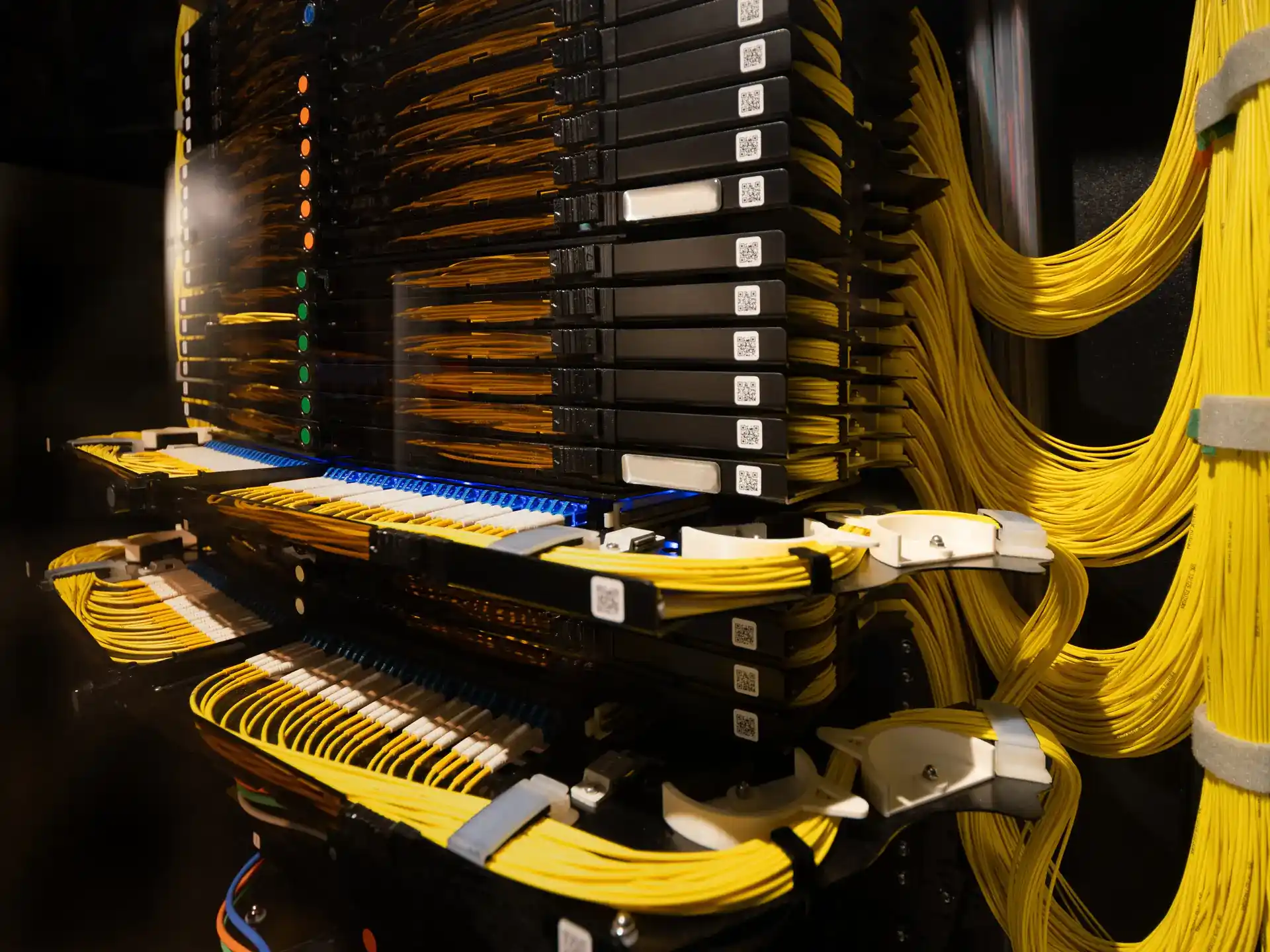
Cooling and electrical design coordinated with capacity planning, redundancy strategy, and power-system studies for data centers and mission-critical rooms.
Overview
Cooling and power decisions need to use the same capacity and operating assumptions. TPS coordinates mechanical loads, electrical distribution, equipment interfaces, and power-system analysis for data centers and mission-critical rooms. The owner’s redundancy strategy, growth plan, and maintenance requirements establish the design brief; the proposal defines the systems and studies that TPS will deliver.
Building systems
Develop the mechanical scope around the IT load, cooling equipment, and operating assumptions supplied by the team. Coordinate equipment power and the utilities needed by the selected systems.
Assess distribution, standby power, and the studies needed for normal, maintenance, and alternate operating modes. Connect capacity planning to the owner’s stated redundancy requirements.
Use Revit/BIM coordination to review equipment, routing, and access against architectural and structural information. Scope utility feeds and duct-bank analysis where required.
Scope the assignment
We confirm disciplines, licensing, sealing, and deliverables for the project location before agreeing to the scope.
What makes this market different
Every component must be serviceable without dropping IT load. We verify it across every failure and maintenance mode before construction.
Sizing to nameplate IT load overbuilds the facility; sizing to current IT load underbuilds it for year-three growth. We model both curves.
Underground utility feeds are thermally derated by concrete encasement and adjacent circuits. CYMCAP studies confirm real-world ampacity.
UPS battery sizing per IEEE 485 with proper aging factor avoids the 4 a.m. surprise that the strings don’t hold.
Where to start
HVAC loads, ventilation, equipment selection, and industrial process utilities.
Building power, lighting, distribution, and equipment connections.
Power analysis and redundancy modeling for high-availability sites.
Steady-state power flow studies for voltage regulation.
Cable ampacity calculations using CYMCAP software.
Representative work
Ohio
Power demand analysis and critical-power study package for a multi-megawatt data center build.
Multi-state
CYMCAP cable ampacity calculations for substation-grade duct banks.
Why TPS
Mechanical and electrical scope built around shared capacity assumptions
Electrical design and system analysis coordinated within the engineering team
CYMCAP-based duct bank engineering where included in the assignment
Defined model, study, and construction-support responsibilities
Share your project location, available plans, and target schedule. We’ll follow up within one business day to discuss the scope and proposal inputs.